
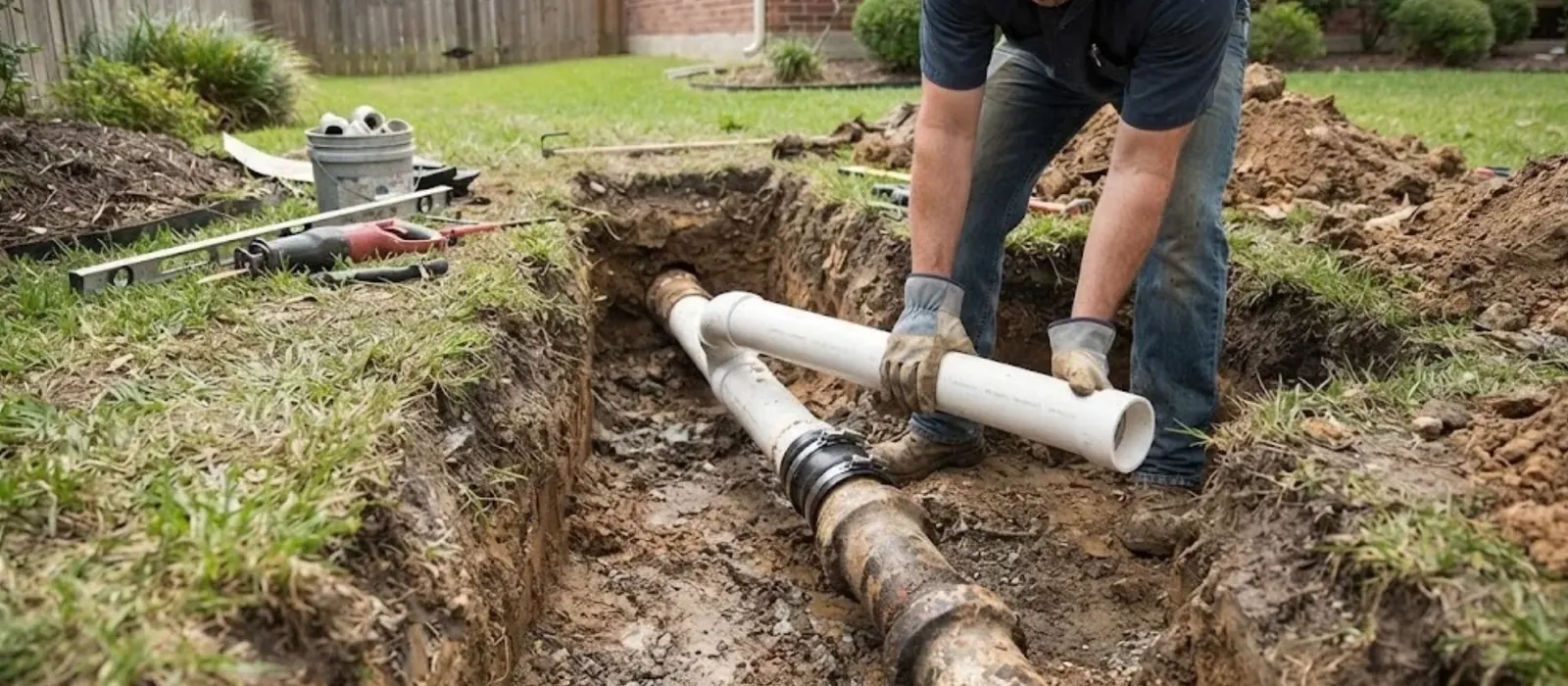
A sump pump is a small submersible pump that sits in a pit dug below the lowest floor or crawl space. When water fills the pit, a float switch turns the pump on and sends the water out through a discharge pipe. It does one job, and it only works if the water has somewhere acceptable to land.
That last part decides most installs. Before you buy a pump, work out the water source, the pit location, the power supply and the discharge route, in that order.
Do you actually need a sump pump?
A pump makes sense when water collects somewhere that gravity cannot drain. Common signs include damp patches along a basement or crawl space wall, a musty smell, standing water after heavy rain, or a floor drain that flows the wrong way. A pump is a response to a specific water path, so find that path first.
Many of these problems have cheaper fixes. Downspouts that dump against the foundation, soil that slopes toward the wall, and clogged gutters feed water to the exact spot where it shows up inside. Correct those first. If water still arrives after the exterior is sorted, a pit and pump are the next step.
Not sure where your pump could legally discharge? Call (855) 575-2890 and describe the low spot where water collects.
Call (855) 575-2890What goes into a sump pump installation?
The pit comes first. A plumber cuts into the slab, digs out a basin about the width of a bucket and a bit deeper, and sets a plastic or fiberglass liner with holes or a gravel base. Water enters from the surrounding soil or from drain lines that lead to it.
The pump sits inside the liner on a flat base. A check valve in the discharge line stops water from running back into the pit after each cycle, and a lid keeps debris and odors out of the room. The float switch needs clear room to rise and fall without touching the wall.
Power is the last piece. The pump needs its own grounded outlet, ideally on a ground fault protected circuit, and a plan for outages.
Pedestal, submersible or battery backup?
The type you pick affects noise, lifespan and how it behaves during a storm.
| Option | How it works | Trade-off |
|---|---|---|
| Submersible pump | Sits inside the pit under the water | Quieter and handles more flow, but harder to service |
| Pedestal pump | Motor mounted above the pit on a column | Easier to reach, but louder and often shorter lived |
| Battery backup pump | Second pump that runs on a battery when power fails | Covers outages, but the battery needs testing and replacing |
| Water-powered backup | Uses household water pressure to push water out | No battery, but it uses water and needs adequate supply pressure |
| Alarm only | Sounds a warning when the pit level rises | Does not move water, but alerts you to a failed pump |
Pumps often fail when the power goes out in a storm, which is when you need them most.
Where does the discharge water go?
Not the sanitary sewer
Discharge is the question that trips up most installs. Water from a sump should be piped outside and released well away from the foundation, on a slope that carries it off the lot. A discharge line that ends near the wall only returns the water to the pit.
Never tie a sump line into the household drain or the sewer cleanout. It floods the public sewer and can back sewage into your own home during a storm.
Los Gatos rules on pumping into the sewer
West Valley Sanitation District serves Los Gatos, and its code bars storm water, groundwater, subsurface drainage and roof water from the sanitary sewer. Its website also tells residents to stop pumping basement water into it. For you, that means a sump line cannot connect to a toilet drain, a laundry standpipe or a cleanout.
The district also says work on a private upper lateral requires a permit, so any change near your sewer connection is not casual. We have no verified rule on whether a pump may discharge to a storm drain or a creek, so ask the Town of Los Gatos before you connect to anything public. The Town accepts building permit applications through its online portal, and you should ask who files the permit and whose name goes on it.
Some homes here keep a sewer backflow device. If you have one, check it every three to six months, since its flap can close during a blockage. A sump pump has no business sharing that line.
Safety checks before and after install
Water, power and a pit in a basement call for a few firm rules.
Sump safety checklist
- Keep the pump on a ground fault protected outlet, and never run an extension cord through standing water.
- Switch off power at the breaker before reaching into a flooded pit.
- If water covers outlets or the panel, stay out and call an electrician or your utility.
- Test the pump by pouring a bucket of water into the pit every few months.
- Listen for a pump that runs constantly, since that suggests a stuck float or a failed check valve.
- Test the alarm and battery backup on a schedule you will remember.
How a plumber plans the job
A good visit starts with a look at where water enters, where the lowest floor sits and where the discharge line can run. Before quoting the work, the plumber we send for plumbing installation checks slab thickness, the electrical outlet, and the grade outside.
If the house is on the sewer and the discharge plan touches a drain line, we keep sump work separate from the sanitary system. For lateral issues, sewer line repair is a different job with its own permit step, and mixing the two causes the exact trouble the district warns about.
Hillside lots and neighboring towns
Homes in the Lexington Hills area and Saratoga often sit on slopes, where the discharge line can use grade to carry water downhill. On a slope, a long pipe run also needs a stable outlet so the water does not wash soil or reach a neighbor's yard.
Call (855) 575-2890 to talk through the low spot you have. We give a clear price before work starts and can schedule same-day appointments when available.
Sump pump questions for Los Gatos homeowners
No. West Valley Sanitation District's code bars groundwater, storm water and subsurface drainage from the sanitary sewer, and its website says to stop pumping basement water into it.
It varies with use, water quality and pump type. Test it a few times a year and replace it if it cycles constantly or makes grinding noises.
If power fails during storms where you live, yes, it is worth considering. A primary pump cannot run without electricity.
Permit rules vary, so check with the Town of Los Gatos building division. Any work on a private sewer lateral requires a permit under the district's rules.
Outside, well away from the foundation, on ground that slopes away. Confirm the destination with the Town before connecting to any public drain.
Our dispatch runs 24/7. Call (855) 575-2890, shut off power to wet areas if it is safe, and a clear price is given before work starts.