
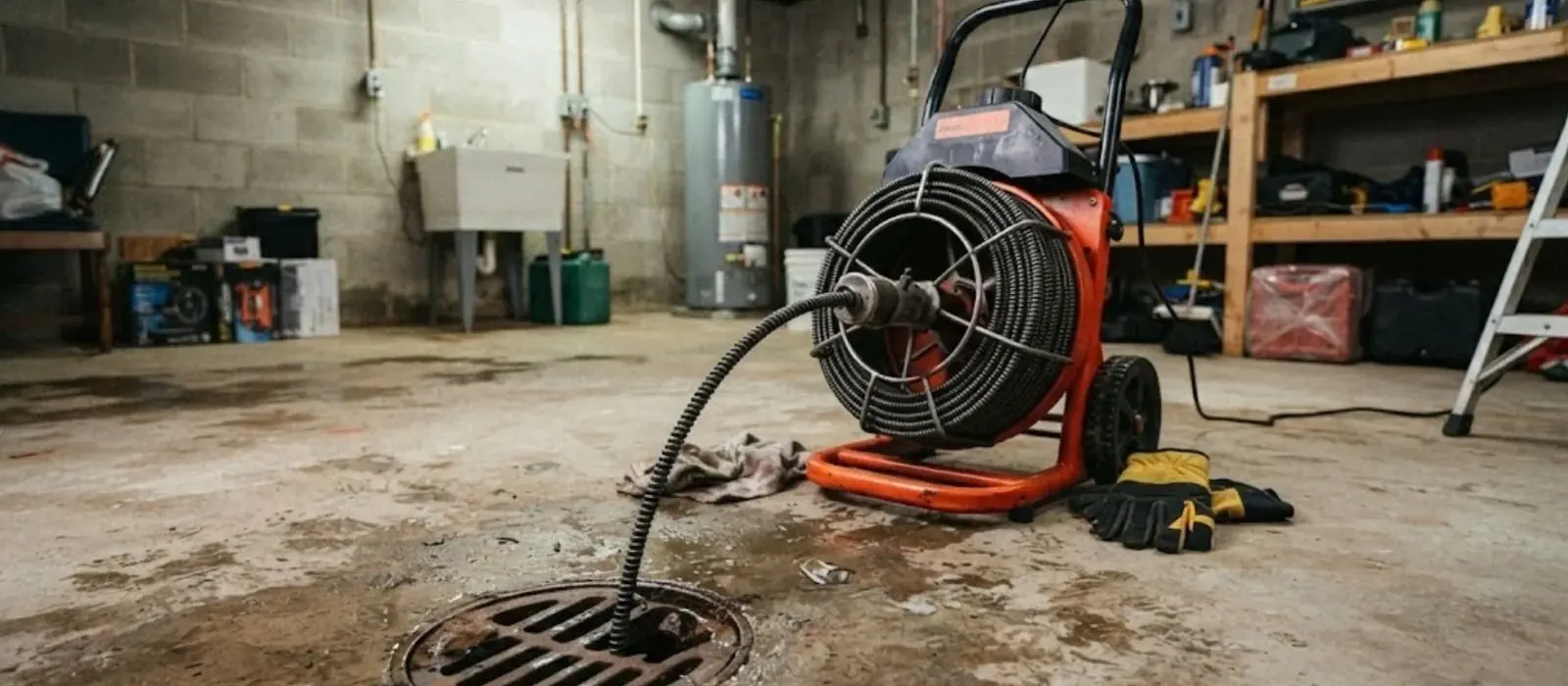
Drain backup in progress, what to do first
Standing water in a sink, tub or floor drain is urgent, and we dispatch plumbers 24/7 for exactly this. Every minute you keep running water makes the overflow bigger, so the first job is to stop adding to it.
Do the steps below while you wait for the truck. They take a few minutes and often save a floor.
- Stop all water use. Do not run the dishwasher, washing machine, shower or any tap until the line is open.
- Do not flush. If a toilet and a tub both gurgle, the blockage is likely in the main line and every flush adds to the pile.
- Pull rugs and towels back from the wet area, and unplug anything on the floor near standing water.
- Call (855) 575-2890, say which fixtures are slow or full, and mention any gurgling sounds from other drains.
Skip bottled chemical openers if you can. They sit in a blocked line and burn skin and eyes when the plumber opens the trap, and they rarely dissolve a hairball or a grease plug.
What a clogged drain actually is
In Los Gatos, as anywhere, a drain is a sloped pipe that carries wastewater away by gravity, with a curved trap under each fixture that holds a water seal against sewer gas. A clog is anything that narrows that pipe until water cannot pass, usually hair, soap scum, grease, food, paper or roots.
Fixture drains are small, typically one and a half to two inches, so a plug forms quickly. The main line leaving the house is larger, usually four inches, and it takes longer to block but affects every fixture at once.
Where the blockage sits tells you who fixes it and how. One slow sink points to that fixture's branch. Several slow fixtures, or a toilet that bubbles when the washer drains, points to the main.
When a line backs up in a house near the Los Gatos Creek Trail, walk the yard for the capped cleanout pipe before you call. West Valley Sanitation District, which works in Santa Clara County, splits the lateral at that point. We take drain calls from ZIP codes 95030, 95031, 95032 and 95033.
Water standing in a tub or sink right now? Call (855) 575-2890 and describe which fixtures are slow so the right cable and tools are on the truck.
Call (855) 575-2890Why the kitchen sink clogs differently
Kitchen lines carry the worst material in the house. Cooking grease is liquid when it leaves the pan and hardens into a waxy lining once it cools in a two-inch pipe, often under the floor or inside a wall where nobody can see it. Coffee grounds, rice, pasta and eggshells settle in that lining and build a plug.
A garbage disposal grinds food finely but does not remove the grease. If the sink drains slowly even after the disposal runs clean, the plug is usually past the disposal, in the trap arm or the horizontal run behind it.
A cable with a small cutting head is the right first tool for this. If the pipe is coated with years of grease, a cable can punch a hole through the middle and leave the walls coated, which is why kitchen clogs can return within weeks. In that case we recommend following with a jetter pass to scour the wall.
Checks you can make before calling
A few quick observations help the plumber bring the right equipment. None of them require tools beyond a flashlight.
What to note about the clog
- Which fixtures are slow, and whether the problem started at one sink or hit several at once.
- Whether a different drain gurgles or bubbles when you run water in the first one.
- Whether the washing machine standpipe or a floor drain in the garage is backing up too.
- Whether a toilet flushes weakly even though its tank refills normally.
- Whether you can find an outdoor cleanout, a capped pipe near the foundation or in a front bed.
How we clear a line, step by step
Most fixture clogs start with removing and inspecting the trap, since a handful of hair or a dropped ring is often right there. If the trap is clean, we feed a cable into the branch line. A drum machine pushes a spinning steel cable with a cutting head, and the cable's resistance tells the plumber whether it has hit a plug, a bend or a joint.
For the main line, the cable goes in through a cleanout if one exists. West Valley Sanitation District says that if a property has no cleanout or its location is unknown, the owner is responsible for clearing the line all the way to the district main. That is a practical reason to locate your cleanout now, before a backup, and to tell the plumber where it is.
After the line opens, we run water through it and check that each fixture drains at a normal rate. If the symptoms point to something a cable cannot explain, such as a recurring clog in the same spot, we recommend a camera pass so you see what is in the pipe.
Cable, jetter or camera, which one fits?
Each tool solves a different problem. This table shows how we usually choose, though what we find in the pipe can change the plan.
| Situation | Usual first tool | Why |
|---|---|---|
| Single slow sink or tub, first time | Hand or drum cable | Opens a soft plug like hair or soap quickly. |
| Kitchen line that clogs every few weeks | Cable, then jetter | Cable breaks the plug, jetting removes grease on the wall. |
| Several fixtures slow, toilets gurgle | Cable through the cleanout | Points to the main line, so the larger head is used. |
| Same clog returns after a cable run | Camera, then jetting | Shows roots, a sag or a cracked joint before more cleaning. |
| Water backs up in the lowest floor drain | Main line cable and camera | Lowest fixtures show a main blockage first. |
A cable is the wrong tool for a collapsed or offset pipe. A camera shows that before anything gets forced.
When the clog is in the main line
A blocked main line behaves differently from a fixture clog. Water from the shower rises in the toilet, or a floor drain in the garage gurgles when someone uses the washer. These are signs the whole house is draining into a restriction.
In our service area, West Valley Sanitation District operates the public sewer main and the lower lateral from the property-line cleanout to the main. The owner is responsible for the upper lateral, from the house to that cleanout. If the blockage is in the district main, the district says to call them first, and notes there is no extra charge for the crew visit.
If the district's crew finds the main clear, the blockage is on the private side, and that is where we come in. For repeated main-line problems, see sewer line cleaning and, if a camera shows damage, sewer line repair.
Wipes, grease and what the sewer district asks
The district's message to residents is short. Flush only toilet paper and human waste, and keep so-called flushable wipes out of the toilet. Wipes do not break down like paper, and they wrap around cable heads and pump impellers in the same way they snag in your pipe.
In kitchens, scrape pans into the trash and wipe greasy plates before rinsing. Pouring hot water and dish soap down the drain pushes grease further along the pipe, where it cools and sets up again.
Small drains people forget about
A slow bathroom sink is usually a hair and toothpaste plug just below the stopper, and a trap cleaning handles it. Pull the stopper, clear what you can see, and run the tap to check the flow before you call.
Floor drains in garages and laundry rooms collect lint and dirt and sit idle for months. If the grate shows standing water or smells, the trap seal may have dried out, or the line is partly blocked. Pour a gallon of water into it and watch how it drains.
A leaking drain pipe is a different problem from a clog. Dampness around a fitting under a sink or a stain below a tub points to a joint or a cracked section, and the repair is a replaced fitting or pipe, not more cabling.
Repair choices when cleaning is not enough
Repeated clogs in the same place usually mean the pipe is damaged as well as dirty. Older cast iron or galvanized steel develops rough scale inside that catches paper, and clay or ABS pipe can sag so water pools and debris settles.
The honest decision is simple. If a camera shows a clean, sound pipe with a plug, cleaning is the right answer and a regular cable or jetting schedule keeps it that way. If the camera shows a cracked joint, a belly or roots, cleaning only buys time and a spot repair is the sensible next step.
When the problem is a single bad section, we cut it out and replace it. When the whole run is failing, we talk through options for a longer repair, with the trade-offs on disruption and lifespan. You decide, and we give a clear price before work starts.
What affects the cost of clearing a drain
We do not quote a number by phone for a problem we have not seen, but these are the factors that move the final price.
Which line is blocked
A single fixture trap is a smaller job than a main line cleared from a distant cleanout.
Access to the pipe
A cleanout makes the work faster. Without one, the plumber may need to pull a toilet or work from a roof vent.
Equipment needed
A hand cable, a drum machine, a jetter and a camera each add time and cost as the job grows.
Cause of the blockage
Soft debris clears in one pass. Roots, grease buildup or a damaged section take longer.
Time of day
Calls at night or on weekends are dispatched around the clock, and after-hours work is priced differently from a daytime visit.
Insurance depends on the cause. A sudden accidental backup is sometimes covered, often with limits, while a clog from wear, roots or slow buildup usually is not. Policies differ, so read yours or ask your agent before assuming either way.
Want your real number? Call (855) 575-2890. We give a clear price before work starts, and same-day appointments are offered when available.
Booking a same-day visit
If the drain is slow but not overflowing, same-day appointments are available when the schedule allows. If it is overflowing or a toilet is backing up, say so on the call and we treat it as urgent.
Give the dispatcher your street when you call, since the address decides which sewer district and building office apply. If you live just over the line in Campbell, the same line covers you.
Drain questions Los Gatos homeowners ask
Yes. Dispatch runs 24/7, so a backed-up drain at 2 a.m. on a Sunday gets a live answer, not a voicemail. We do not promise an arrival time, but we do tell you what to do while you wait.
Usually grease has coated the pipe wall, and a cable only punches a hole through it. Jetting removes the coating, and a camera can show whether the line also has a sag. See hydro jetting for how that works.
A floor drain that backs up when you run the washer often points to the main line. A yard drain that holds water may be full of leaves and silt. Either way, tell us what else is draining at the time.
A properly sized cable with the right head does not harm sound pipe. Cable should never be forced against resistance in old or cracked pipe, which is why we stop and use a camera when the cable stalls.
West Valley Sanitation District handles the public main and the lower lateral. Call the district first for a backup. If the district finds its side clear, the blockage is on your private line and we can clear it.
It depends on the cause. A sudden backup may be covered, while wear, roots and gradual buildup often are not. Check your policy or ask your agent.