
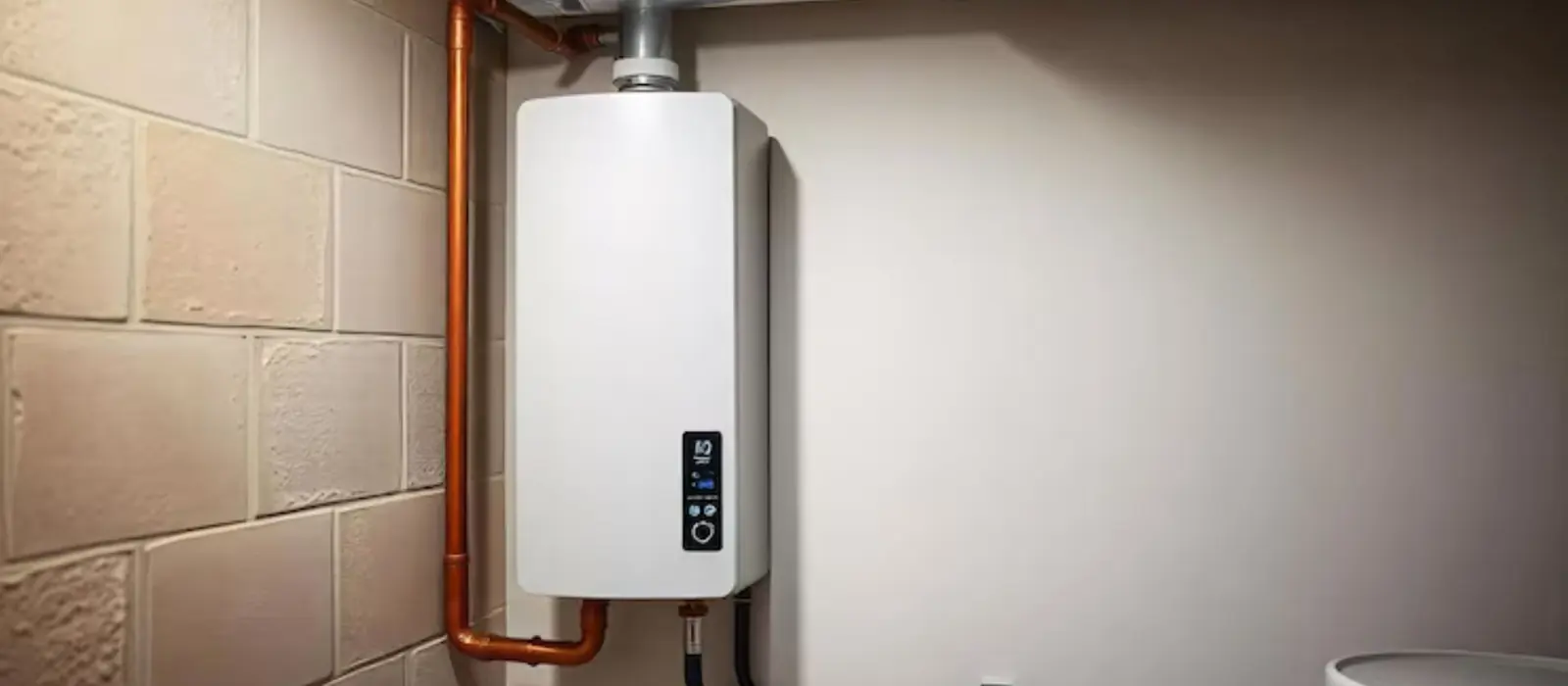
How a tankless heater works and why it scales up
A tankless water heater has no storage tank. When a hot tap opens, a flow sensor fires a burner or energizes electric elements, and water is heated as it passes through a heat exchanger. The unit only works while water is moving.
That design is efficient, but the heat exchanger has narrow passages. Dissolved minerals in the water bake onto those hot surfaces as scale. Scale narrows the passage, raises temperatures inside the unit and eventually triggers error codes, lukewarm output or shutdowns.
What Los Gatos water does to the heat exchanger
San Jose Water serves Los Gatos, and its 2025 report lists three source types. Mountain surface water averages 151 ppm hardness, which is 9 grains per gallon. Groundwater averages 288 ppm, or 16.8 grains per gallon, with results from 175 to 451 ppm. Treated Valley Water averages 99 ppm, or 5.8 grains per gallon.
Which source reaches your faucet depends on where you live, and we cannot say from the address alone. Test your tap with a hardness kit, or ask San Jose Water. The harder the water, the shorter the interval between flushes, so use that test to set your schedule rather than guessing.
San Jose Water draws part of its supply from mountain surface water in the Los Gatos Creek watershed, listed at 151 ppm hardness, so test your own tap before you set a flush schedule. Tankless calls in Santa Clara County ZIP codes 95030, 95031, 95032 and 95033 come to the same line.
Tankless unit throwing an error or running lukewarm? Call (855) 575-2890 and give us the model name and the error code.
Call (855) 575-2890Tankless flush and descale, step by step
Flushing is the most useful routine job on a tankless heater, and it is the one most often skipped. The process circulates a descaling solution, usually a mild food-grade acid, through the heat exchanger so the scale dissolves and rinses out.
- Turn off the gas or power and close the hot and cold isolation valves.
- Open the service ports and connect hoses to a small pump and a bucket of descaling solution.
- Circulate the solution through the unit for the time the maker recommends, often close to an hour.
- Flush with clean water, remove and clean the inlet screen, then reopen the valves and restore power.
Units installed without service valves cannot be flushed this way. We add isolation valves during the visit so every later flush is quick.
How often?
The right interval depends on your hardness and use. Many manufacturers suggest yearly in harder water. If you see a code that mentions scale, flow or temperature, do not wait.
Why a softener may pay off
If your tap tests hard, a water softener removes most of the calcium before it reaches the heater. That cuts scale on the heat exchanger and on fixtures, and it makes flush intervals longer.
A softener adds its own upkeep with salt and a regeneration cycle, so it is a choice, not a requirement. Ask your tankless maker whether the warranty requires water treatment above a certain hardness, then decide with the number in hand.
Tankless water heater problems we diagnose
Most calls start with a symptom, not a model number. Here are the common ones and what they usually point to.
- Water turns lukewarm at low flow, which often means a flow sensor or scaled exchanger.
- The unit cycles on and off during a shower, which can mean scale or a partly closed valve.
- An error code flashes, which should be looked up in the unit's manual before anyone resets it.
- Hot water arrives slowly after a long wait, which is common and may call for a recirculation pump.
- Exhaust smell or visible soot calls for an immediate shutdown and a venting check.
For gas units, treat any gas smell as an emergency. Leave the building, avoid switches and flames, call 911 from outside, call the gas utility, and only then call a plumber.
Repair or replace a tankless unit?
Many failures are inexpensive to fix. A scaled exchanger often responds to a descale, a failed flow sensor or igniter can be swapped, and a clogged inlet screen takes minutes to clean.
Replacement becomes the better path when the heat exchanger has corroded or cracked, when parts are no longer made, or when repairs have been repeating. Some installers will not service a unit they did not install, so ask first. We service common brands and will tell you plainly when repairing the unit makes sense and when a new unit is the cleaner choice.
Tankless or tank: how the two compare
Neither is better in every house. This table lays out the trade-offs we discuss at the kitchen counter.
| Question | Tankless | Tank |
|---|---|---|
| Hot water supply | Continuous while water flows | Limited by tank size |
| Space | Wall mounted, small | Floor space needed |
| Routine upkeep | Yearly flush, clean screen | Occasional flush, anode rod check |
| Install demands | Larger gas line, venting or heavy circuit | Simpler gas or power needs |
| Typical weak point | Scale on the heat exchanger | Tank corrosion over time |
Permit rules vary, so check with the Town of Los Gatos building division.
Gas line, venting and electrical needs
A gas tankless unit burns a lot of gas at once, so the line feeding it must be sized for the full load. A pipe that works for a tank heater is often too small. Venting also changes, because most units use stainless or plastic vent pipe rated for the specific model.
Electric tankless units draw heavy current and may need a large circuit and panel space. Before you buy, ask for a load check at your panel.
Permits when you switch from a tank
The Town of Los Gatos accepts building permit applications only through its online citizen portal. Replacing a water heater with the same type in the same location uses a quick permit, but changing from a tank to a tankless unit changes the type and the quick form does not apply.
That means a regular building permit, so ask who files it and whose name goes on the permit. Ask who will file it. Ask the Town building division what it requires for a wall-mounted unit.
Installing a new tankless unit
A good install starts with a plan. We check the gas supply size and vent route, confirm electrical needs, mount the unit on a solid wall and add isolation valves for flushing. We then set the temperature and test every hot tap.
If your home is up in the hills, for example around the mountain community of Lexington Hills, tell us about long pipe runs between the heater and far bathrooms. A recirculation loop or a small buffer tank can cut the wait for hot water. For a general overview of tank installs, see water heater installation.
What changes the price of tankless service
Prices swing widely on tankless work, and these are the main reasons.
Service or install
A flush is a short visit, while a new install touches gas, venting and permit paperwork.
Unit capacity
Larger units cost more, and demand from several showers at once determines the size you need.
Gas line and venting
Upsizing the gas pipe or running new vent adds labor.
Scale condition
Heavily scaled exchangers may need longer circulation, and some are past saving.
Water treatment
A softener or filter adds to the project if your hardness test calls for one.
Insurance rarely covers scale damage, because that is wear over time. A sudden leak from a burst fitting may be covered. Policies differ, so read yours.
Want your real number? Call (855) 575-2890. We give a clear price before work starts.
Keeping a tankless heater running for years
Write the install date on the unit with a marker, set a yearly reminder to flush it and clean the inlet screen, and keep the area around the vent clear. Do not store paint, solvents or spray cans nearby.
If you ever see a leak, smell exhaust or hear unusual banging, shut off the unit and call. Calm planning always costs less than a rushed replacement.
Tankless questions from Los Gatos homeowners
Many makers suggest once a year, and harder water may call for more. Because supply varies by source, test your tap and ask San Jose Water which source serves your area.
Yes. We work on common brands whoever installed them. If the unit has no isolation valves, we add them so flushing is possible.
Common causes are scale, a blocked inlet screen, low gas supply or a vent problem. Write the code down and read it to us when you call (855) 575-2890.
It depends on your water hardness and the manufacturer's warranty. See water softener and filtration for how we size one.
Yes. Changing type means a regular building permit from the Town rather than the quick same-type replacement.
It depends on your hot water use and space. A long wait for hot water, a small closet or a failing tank all point toward tankless, and we walk through your case.
Turn off the water and power to the unit and call us. Leaks near the heat exchanger usually mean the unit needs replacement rather than repair.