
What a sewer camera sees that you cannot
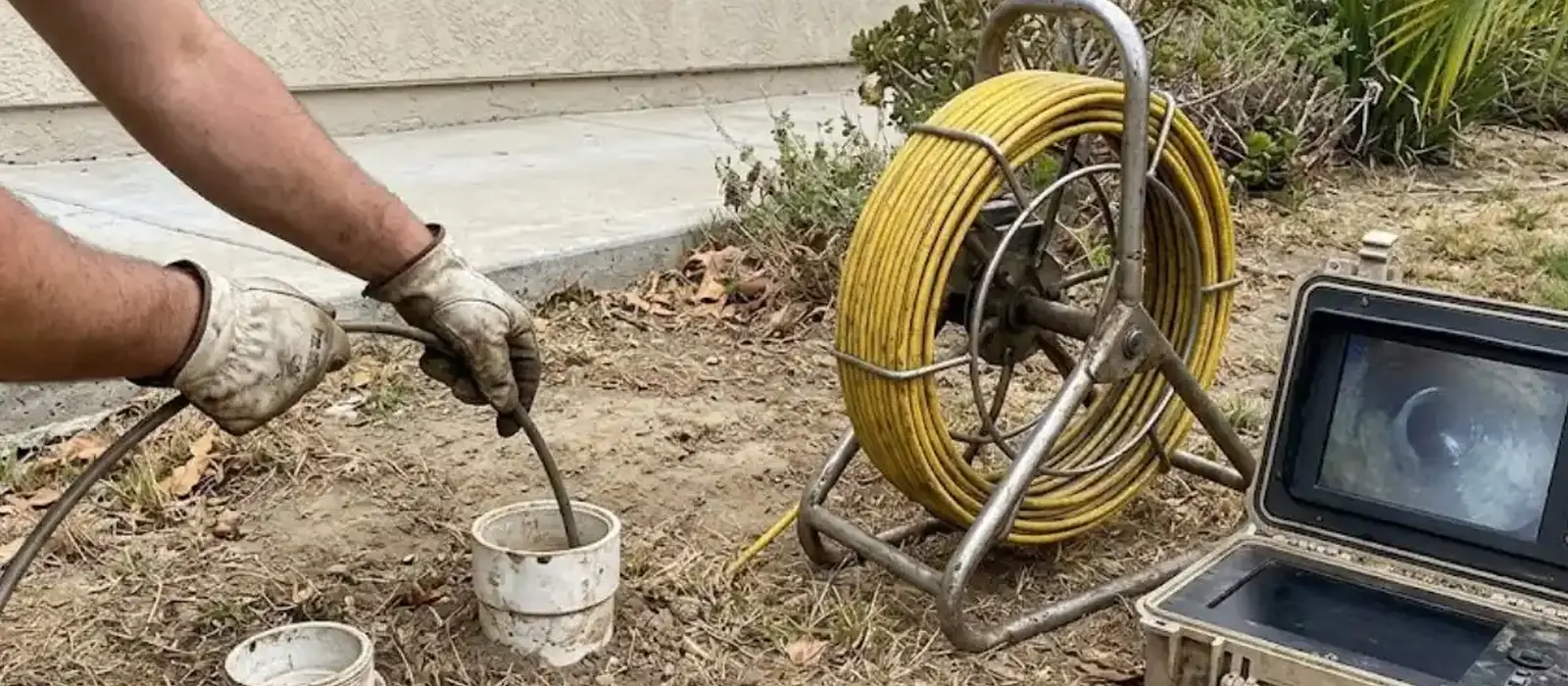
A sewer camera is a lit lens on a flexible rod that feeds through a cleanout or a pulled toilet. A screen shows the pipe wall as it moves along, and a counter shows how far it has traveled. A small transmitter in the head lets a locator find the exact spot above ground.
That combination answers two questions. What is wrong inside the pipe, and where is it relative to your yard, driveway or foundation. Without a camera, both are guesses.
Four moments when a camera run pays off
The first is before you close on a house. Sellers rarely know what the lateral looks like, and clay or fiber pipe can hide serious damage. The second is after a second or third clog in a short span, which usually means something structural.
The third is before digging, paving or planting a tree. A locate shows where the line runs and how deep, so a trench does not cut it. The fourth is before lining or replacement, when a recorded run gives the repair crew a map. Ask for a copy of the footage and the notes.
Need to see inside your sewer line? Call (855) 575-2890 and ask about a camera run and locate.
Call (855) 575-2890Who owns which part of the sewer line?
West Valley Sanitation District, based in Campbell, serves Los Gatos, Campbell, Monte Sereno, about two thirds of Saratoga and some unincorporated county areas. Its code makes the upper lateral, from the building to the property line cleanout, the owner's responsibility. The lower lateral, from the cleanout to the public main, is the district's.
If a property has no cleanout, or no one knows where it is, the district says the owner is responsible for clearing the line all the way to the main. Where a lateral connects to a main in an easement rather than a street, the entire lateral and its cleanouts fall on the owner. Knowing which case you are in tells you who to call after the camera finds a problem.
On hillside lots off Highway 17, the camera also shows whether the pipe holds its slope, and the Town's septic conversion checklist cites a minimum of one quarter inch per foot as a reference point. We run cameras in Santa Clara County ZIP codes 95030, 95031, 95032 and 95033.
The November 2026 cleanout cutoff
Ask the district how this applies to you
The district code ties continued upkeep of existing lower laterals to cleanouts and laterals installed before November 1, 2026 that were permitted, built to standard and safely accessible. A lateral with no accessible cleanout may not fit that description.
A camera run can show whether a cleanout exists, where it sits and whether it is reachable. Contact West Valley Sanitation District to confirm how the rule applies to your property, and keep your footage as a record.
Reading what the camera finds
Not every defect needs a dig. This table shows common findings and the usual next step.
| Finding | What it looks like | Usual next step |
|---|---|---|
| Root intrusion | Fine white threads or a mass at a joint | Cable or hydro jetting, then watch for regrowth |
| Grease or scale buildup | Rough coating that narrows the bore | Jetting to scour the wall, then recheck |
| Sag or belly | Standing water in a low stretch | Monitor, or replace the section if it holds debris |
| Offset or cracked joint | Pipe sections shifted or split | Spot repair, lining or replacement |
| Collapsed pipe | Camera stops, pipe wall missing | Excavation or trenchless replacement |
A bad stretch of pipe is not always a reason to replace the whole lateral.
How the visit works
We start by locating the cleanout. If there is none, we may pull a toilet to get access, which is a normal step. The line is often cleared first with a cable or jetter so the camera can see the wall instead of debris. See main line cleaning if the line needs more than a quick rinse.
The camera travels slowly and we mark any defect by distance. The locator then traces the line on the surface and flags depth and turns. You see the screen as we go, and we explain each finding in plain terms before any repair is discussed.
Backflow devices, septic leftovers and permits
The district requires an owner-funded backflow protective device when the lowest fixture floor sits less than one foot above the nearest upstream manhole, or when site conditions or past backups call for it. Owners with one should check it every three to six months, because its flap can close during a blockage. A camera visit is a good time to ask whether you have one.
The Town of Los Gatos has a checklist for abandoning a septic tank and connecting to the sewer, so some properties may still have septic remnants. A septic conversion needs a district certificate before a plumbing permit is issued. Work on a private upper lateral requires a permit too, and permit rules vary, so check with the Town building division.
If sewage is backing up right now
A camera inspection is a planned visit, not an emergency response. If a drain is backing up, the district tells residents to call the district first and stop using water until it clears, and it notes there is no extra charge for the crew visit. Crews check the district main and clear the lateral from the cleanout to the main, and anything beyond that needs a plumber.
Once the line is moving again, schedule a camera run so you know why it backed up.
What changes the cost of an inspection
Prices depend on access and on what the line needs before the camera can see.
Access point
A working cleanout is quick. A pulled toilet or a roof vent route takes longer.
Length and depth
Longer, deeper laterals need more cable and more locating.
Pre-cleaning
Heavy roots or grease may need cabling or jetting before the lens is clear.
Locating and marking
Tracing the line and marking turns above ground adds time.
Report and footage
Recorded video and written notes for a buyer or contractor take extra time.
On insurance, a sudden accidental backup may be covered, while root damage, wear and slow deterioration often are not. Policies differ, so check yours.
Want your real number? Call (855) 575-2890. We give a clear price before work starts.
Scheduling your camera run
Tell us where the cleanout is, if you know, and which fixtures have been slow. If you are buying, share the closing timeline so the visit fits. We handle inspections for homes served by the Campbell-based district, and our Campbell service area page lists nearby coverage. Same-day appointments are available when the schedule allows.
Call (855) 575-2890 to book. If the footage shows a failed section, our sewer line repair page explains the options.
Questions before a sewer camera visit
Not always, but it helps. Without one, we may pull a toilet. The district says an owner without a known cleanout is responsible to the main.
It shows what is blocking the pipe and where. Clearing the clog is a separate step, usually by cable or jetter.
Yes, especially for older homes. The run shows root damage, offsets and sags that a seller may not know about.
The district code makes the lower lateral district owned, but confirm with the district because cleanout and easement rules change that.
Ask when you book. Footage is useful for a buyer, a contractor or the district.
No. It diagnoses. If it finds damage, sewer line repair options include spot repair, lining and replacement.