
Sewer backup: what to do first
Sewage rising in a shower, tub or floor drain cannot wait for morning, so our dispatch line is open 24/7. Until a plumber is on site, the goal is to stop adding water to the pipe and keep the wet area clear.
- Stop all water use. No flushing, no washing machine, no dishwasher, no showers.
- Call West Valley Sanitation District. Its crews check the district main first and there is no extra charge for the visit.
- Keep children and pets out of the wet area, and keep sewage off hands and shoes.
- Call (855) 575-2890 if the district finds its main clear or says the blockage is on your side of the line.
Tell the dispatcher which fixture backed up first. The lowest drain in the house, often a basement or ground-floor shower, is usually the first place a main line blockage shows itself.
Main line clog or just one slow drain?
A single slow sink points to that fixture's own trap or branch pipe. A main line clog behaves differently because every drain downstream of the blockage is affected at once.
- The toilet gurgles or bubbles when the washing machine drains.
- Water from a shower rises around the floor drain after you flush.
- More than one fixture is slow or backed up, usually on the lowest floor first.
- A cleanout cap in the yard or garage shows standing water when removed.
Two or more of these together mean the blockage sits in the main. A plunger will not reach it, and chemical drain openers can sit in the pipe and burn whoever opens the cleanout next.
Gurgling in the tub when the washer drains usually means the main line. Call (855) 575-2890 and tell us which fixtures are backing up.
Call (855) 575-2890Who owns which part of the sewer lateral?
West Valley Sanitation District, which is based in Campbell, serves Los Gatos. Its code makes the upper lateral, from the house to the property line cleanout, the owner's responsibility, while the lower lateral from the cleanout to the public main belongs to the district.
District crews check their main and, where a cleanout exists, clear the lateral between that cleanout and the main. Anything beyond that needs a plumber. If your property has no cleanout, or nobody knows where it is, the owner is responsible for clearing the line all the way to the main, so locating or adding a cleanout is often the first job.
Houses along the Highway 17 corridor in Los Gatos and Campbell fall in the same district, which is based in Campbell and works in Santa Clara County, so the cleanout rule is the same on both sides. We clear lines in ZIP codes 95030, 95031, 95032 and 95033.
How a main line is cleared from the cleanout
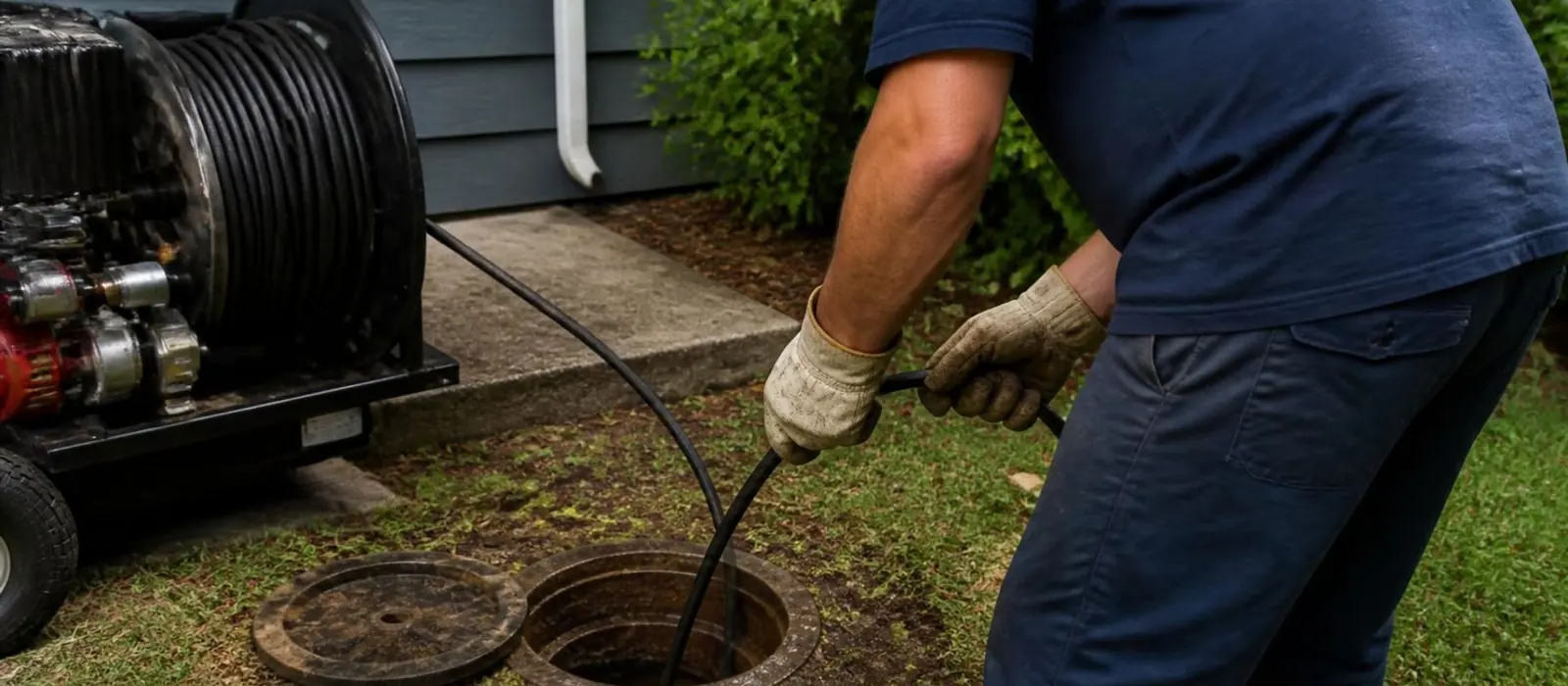
We pull the cleanout cap slowly, since a full line can release under pressure. A powered drum machine then feeds a cable with a cutting head down the lateral, and the head grinds through grease, paper and fine roots until water drains freely.
The camera comes next when the cause is not obvious. A clog that returns within weeks usually has a reason, such as a sag in the pipe, a broken joint or a root mass that the cable only opens a channel through. Main sewer cleaning, sewer drain cleaning and sewer backup can sound like separate jobs, but the method is the same and the cleanout is the entry point for all three.
Cable, jetter or repair, which fits?
The right tool depends on what the line is holding and what shape the pipe is in.
| What we find | Usual approach | Trade-off |
|---|---|---|
| Paper and soft waste in a sound pipe | Cable with a cutting head | Fast, but leaves a film on the pipe wall |
| Grease buildup or heavy scale | Jetting after the cable | Scours the wall, wrong for cracked or collapsed pipe |
| Roots at a joint | Cable now, then camera | Roots regrow unless the joint is repaired |
| Belly, offset or broken pipe | Spot repair or lining | Cleaning only buys time |
Camera footage decides between rows three and four.
Why does the same line keep backing up?
Roots enter through joints in older clay and cast iron laterals, looking for moisture. Grease cools and coats the pipe wall until paper snags on it. Wipes sold as flushable do not break down, and the district's public message is to flush only toilet paper and human waste.
A line that clogs twice in a year deserves a look with a camera, which our sewer inspection work uses to measure the damage before anyone digs. If the pipe is cracked or sagging, sewer line repair replaces the failed section instead of clearing it again and again.
Backflow devices and the November 2026 cleanout date
The district requires an owner-funded backflow protective device when the lowest fixture floor sits less than one foot above the nearest upstream manhole. If you have one, check it every three to six months, because its flap can close during a blockage and hold wastewater in the house.
The code also ties continued district upkeep of existing lower laterals to cleanouts and laterals installed before November 1, 2026 that were permitted, built to standard and safely accessible. A cleanout buried under a planter or added without a permit may not qualify, so ask the district about yours. Work on a private upper lateral needs a permit, and we also dispatch into Campbell when the district office there is your first call.
What affects the price of a main line cleaning
Every line is different, so we explain the factors and then give a clear price before work starts.
Cleanout access
An open, labeled cleanout is quick. A buried or missing one adds digging or a new cleanout.
Length and depth
A longer lateral takes more cable and more time at the machine.
Blockage type
Roots and hardened grease take more passes than paper.
Camera inspection
Recording the pipe adds time but shows whether cleaning is enough.
After-hours dispatch
Night, weekend and holiday visits are priced differently from daytime appointments.
Insurance is worth a phone call. A sudden backup that damages floors is sometimes covered, while root intrusion, wear and slow leaks often are not. Policies differ, so read yours or ask your agent.
Want your real number? Call (855) 575-2890. We give a clear price before work starts.
After the line is open
Run water in every fixture for a few minutes and watch the lowest drain. If it stays quiet, the main is carrying flow again. Keep the cleanout cap tight and clear of mulch.
Same-day appointments are often available when the backup has stopped but you want the cause found. If sewage is still rising or the district says the problem is on your side, call (855) 575-2890 and the 24/7 line will dispatch a licensed plumber.
Questions about clearing a Los Gatos sewer line
Yes. Our dispatch line runs 24/7, and licensed plumbers go out for active sewage backups after hours. We do not promise an arrival time, but we will tell you what we can do and give a clear price before work starts.
The district asks residents to call it first and stop using water. Its crew checks the public main and, where a cleanout exists, the lateral beyond it. If they find nothing, call us.
Air is being pushed past a partial blockage in the main. It is an early warning, and clearing the line now is usually simpler than waiting for a full backup.
Often yes, through a toilet pull or a roof vent, but it is harder. Installing a cleanout makes future work faster and gives the district a clear access point.
No. A first clog in a pipe that has been fine for years may only need the cable. A repeat clog is the case where a camera pays off.
It can if the pipe is cracked or collapsed. That is why we look with a camera first and use a hydro jet only on pipe that is sound.