
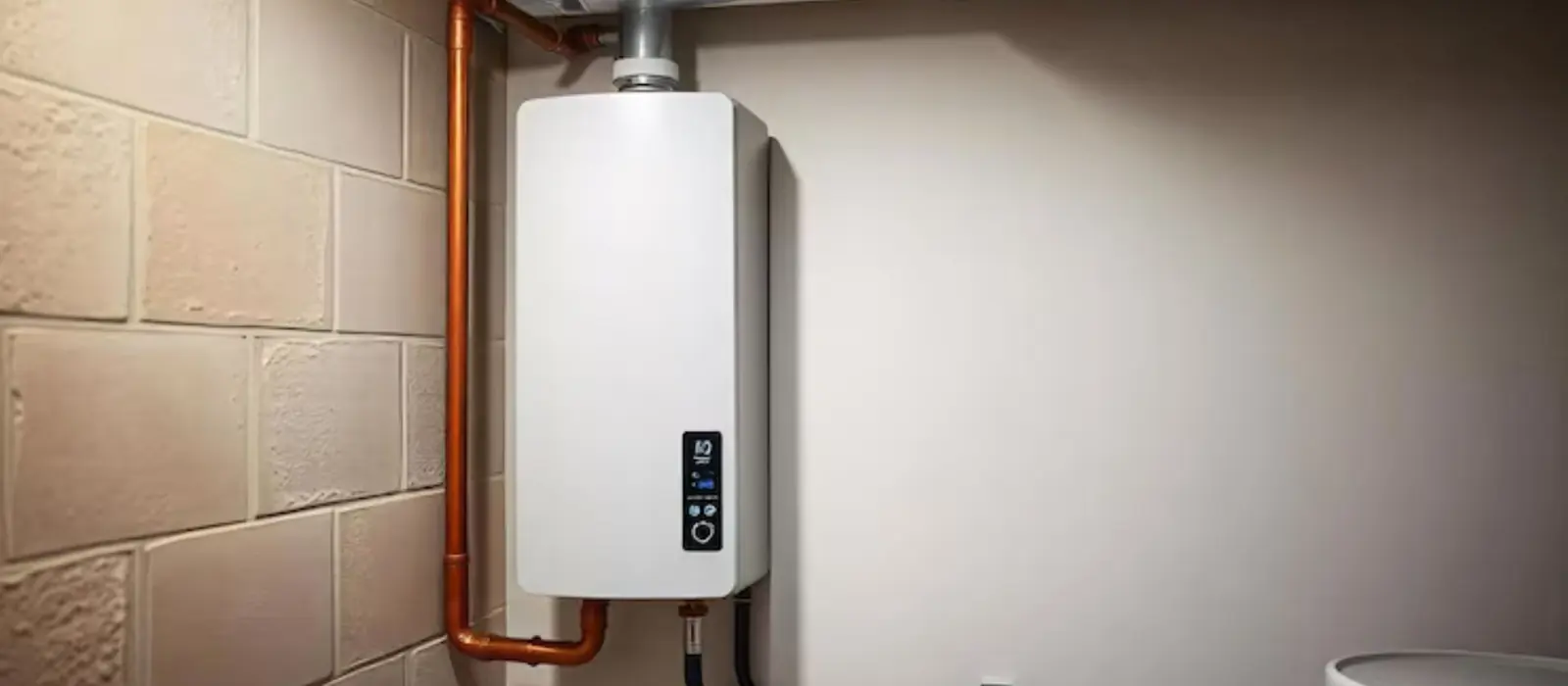
Any honest tankless price starts with a walk through the house. Two homes can buy the identical heater and end up with very different invoices, because the work around the unit changes so much. This guide lists those variables, plus sizing and payback questions, so you can read a quote with confidence. We leave dollar figures out on purpose, since a number printed without seeing your gas line would mislead you.
If you are still deciding whether tankless fits your household at all, our tankless water heater service page covers sizing and what the heater can and cannot do.
What actually sets the price of a tankless install?
The heater body is the easy part. Most of the labor and materials go into the connections that a tank never needed. A gas tankless unit pulls a large burst of gas for a short time, so it often wants a bigger gas line than the old tank did. It also needs a sealed vent that a tank sitting under a draft hood never required.
Then comes the plumbing side. Tankless units need isolation valves with service ports so they can be flushed later, a condensate drain on high-efficiency models, and sometimes a pressure relief discharge routed to a safe spot. A condensing unit wants a drain for its acidic condensate, which can be a real routing problem in a garage with a slab floor.
Each of these items can be small on its own. Stacked together, they explain why a tankless quote is rarely a simple swap.
Want your own number instead of a guess? Call (855) 575-2890 and describe your current heater, gas meter and where you would like the new unit.
Call (855) 575-2890Five cost factors for a Los Gatos tankless install
Use these as a checklist when you compare quotes. If a bid does not mention one of them, ask what was assumed.
Gas line capacity
A tankless burner needs a large flow of gas at once. If the existing line, meter or regulator cannot supply it, the line gets upsized, and that means more pipe, more labor and sometimes a longer trench or wall run.
Venting route
Stainless or approved plastic vent pipe has to reach the outside wall or roof. A short run through the same wall is cheap. A long run through finished ceilings or a second-story chase adds materials and time.
Moving the heater
Mounting on an exterior wall or a different room means new gas, water, vent and electrical runs. Swapping in the same spot as the old tank keeps most of that out of the bill.
Permit path
A change from tank to tankless is a change of type, so it likely takes a regular Town building permit and not the quick same-type replacement. Confirm that with the Town building division. The paperwork and inspection time are part of the job.
Water quality and add-ons
Hard water scales the heat exchanger over time. A softener, a scale filter or flush-ready service valves cost more at install but protect the unit you just bought.
Insurance and rebates deserve a straight answer. Homeowners insurance generally does not pay to upgrade a working tank heater to tankless, because that is an improvement by choice. If your old tank failed suddenly and caused water damage, the damage may be covered while the heater itself often is not, and policies differ, so read yours or call your agent before you assume anything.
Rebates and tax credits exist for some efficient water heaters, but they change often and carry rules. Ask the manufacturer and your utilities for current terms before you buy.
Want your real number? Call (855) 575-2890. A clear price is given before work starts.
Which house conditions push the cost up or down?
This table compares common home setups. It shows direction only, since your actual gas and vent details decide the rest.
| Home situation | Effect on the job | Question to ask |
|---|---|---|
| Old tank in garage, exterior wall close by | Short vent and gas run, usually the simplest case | Is the existing gas line big enough for the new burner? |
| Tank in a closet inside the living space | Longer vent route and possible drywall repair | Where will the vent terminate and who patches the wall? |
| Tank in a basement or crawl space | Vent and condensate drain may need creative routing | How does the condensate leave the house? |
| Moving the heater to a new room | New gas, water, vent and power lines | Is a regular permit application included in the quote? |
| Electric tank replaced with gas tankless | New gas service and a full vent system | Does the gas meter support the added load? |
Direction only. Your gas line, vent path and unit choice set the actual price.
What Los Gatos permits and tap water add
The Town of Los Gatos accepts building permit applications only through its online citizen portal, and you have to register an account first. Replacing a tank heater with the same type in the same place can use a quick online application. Switching to tankless changes the type, and moving the unit changes the location, so either one likely needs a regular building permit instead. Confirm that with the Town building division.
Ask who files the permit and whose name goes on it. For a gas appliance, also confirm the contractor's license through the CSLB License Check tool before you sign.
Water hardness matters for upkeep. San Jose Water's 2025 report lists groundwater at an average of 288 ppm, which is 16.8 grains per gallon, while treated Valley Water averages 99 ppm and mountain surface water 151 ppm. The report does not tell us which source reaches your street, so test your tap or ask your water utility. If you land on the harder end, budget for flush valves and a scale plan.
Tankless or a new tank, which costs less over time?
A tank replacement is almost always the lower upfront job, since the gas line, vent and location already exist. A tankless unit tends to cost more at the start and then makes its case through steady hot water and a smaller footprint. It also needs periodic flushing to keep scale off the heat exchanger.
Tanks fail by leaking, and tankless units fail by scale, ignition faults or vent problems. If your current tank is old and showing rust at the base, compare a like-for-like swap against tankless side by side. The plumber we send for water heater installation can price both so the comparison is fair.
How do you size a unit and judge payback?
Start with your household, not the catalog. Count what runs at the same moment on a busy morning, such as two showers and a dishwasher, and notice how cold the incoming water feels in winter. A tankless unit is rated by how much water it can heat per minute, so more overlapping demand and colder supply both call for a larger unit, and a larger unit usually means a bigger gas line and vent.
Payback depends on factors you can check rather than a promised saving. Think about how long you plan to stay, how much hot water the house really uses, what gas line and vent work add at install, how often you will flush the unit and how hard your water is. A same-spot tank swap starts lower, so tankless needs longer use to make up the extra install work.
Questions to ask before you accept a quote
A good quote answers these without being pushed.
Quote checklist
- Does the quote say the gas line size and whether it is being upsized?
- Where does the vent terminate and what material is it?
- Is the Town building permit included, and who applies for it?
- Are isolation valves with service ports included for future flushing?
- How does the condensate drain from a high-efficiency unit?
- Does the price cover seismic strapping and a pressure relief discharge line?
- What does the written warranty say about hard water and missed flushing?
Neighboring towns, same questions
Homes in Saratoga and Monte Sereno share much of this picture, and the dispatch line covers both. Monte Sereno has hillside lots, and a long vent or gas run on a slope is hard to judge from the phone, so the walk-through matters before anyone commits to a price.
When you are ready, call (855) 575-2890, tell us the age and location of your current heater, and we will explain what the job involves before a price is set.
Tankless cost questions from Los Gatos homeowners
A change of type likely needs a regular building permit instead of the quick same-type online application, which you should confirm with the Town building division. Gas line, venting and condensate work can add to the job as well.
Often yes, if the gas line and vent route allow it. Keeping the location avoids the extra permit questions that come with moving the unit.
Usually not, because it is an upgrade by choice. Sudden damage from a failed tank may be covered while wear is often excluded, and policies differ, so check yours.
Some programs exist, but terms change and many need paperwork before the install. Ask the manufacturer, your gas provider and your water provider for current details.
Yes. Scale builds on the heat exchanger and slows flow, so flushing or a softener protects the unit. Test your tap to see where you land.
Planned installs are scheduled, with same-day appointments when available. If your tank fails after hours, our 24/7 dispatch line at (855) 575-2890 can help you get hot water back.