
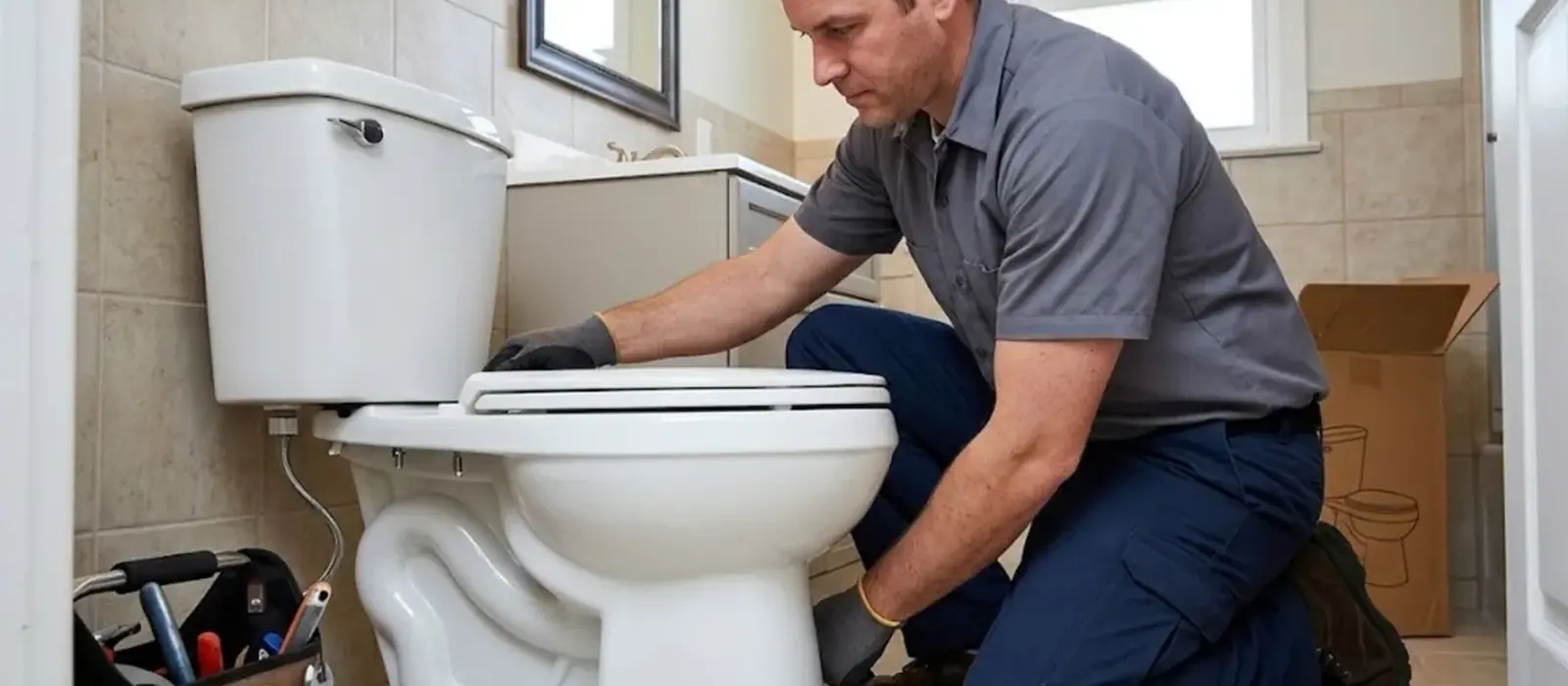
The fill valve is the tower on the left side of most tanks. It opens when the water level drops after a flush and closes when a float tells it the tank is full. When the seal inside wears out, water keeps trickling in, the float never quite shuts it off, and you hear a hiss from the bathroom at three in the morning.
Modern replacement valves are universal and cost far less than the water they waste. Most come with a threaded shank, a locknut, and a height adjustment you set by twisting the base.
Is it the fill valve or the flapper?
Both parts cause a running toilet, and the fixes are different. Sort them out before buying anything.
| Test | Result | What it points to |
|---|---|---|
| Add a few drops of food coloring to the tank, wait 15 minutes | Color shows up in the bowl | Flapper or flush valve seat is leaking |
| Listen with the lid off | Hissing even when the tank is full | Fill valve not shutting off |
| Look at the water level | Water spilling into the overflow tube | Fill valve set too high or failing |
| Watch a flush | Tank refills very slowly | Partly clogged valve or a half-closed angle stop |
| Press down gently on the flapper | Running stops | Flapper not seating properly |
A toilet can have both problems at once. Fix the one you can confirm first.
Valve swap not going as planned, or the angle stop will not close? Call (855) 575-2890 and we will talk through it.
Call (855) 575-2890What tools and parts do you need?
Gather everything before you close the water. A toilet with no water is not a bathroom you want to leave for a hardware store run.
- A universal fill valve, sized to your tank height
- An adjustable wrench or channel-lock pliers
- A small bucket and a sponge
- A replacement supply line if the old one is cracked or stiff
- A towel to catch drips under the tank
Check the supply line while you are there. A braided stainless line with a worn nut is the part most likely to fail next.
How do you replace the fill valve?
Take your time with the first two steps. Most mistakes happen when the tank still holds water or when the locknut is cranked too tight.
- Turn the angle stop under the tank clockwise until it stops, then flush to empty the tank.
- Sponge the last water out of the bottom of the tank.
- Place the bucket under the supply connection and unscrew the supply line from the base of the valve.
- Unscrew the large plastic locknut under the tank that holds the valve in place, then lift the old valve out.
- Drop the new valve in, set it at the manufacturer's height mark, and hand-tighten the locknut, then give it a quarter turn more with pliers.
- Reconnect the supply line, clip the refill tube to the overflow pipe, and open the angle stop slowly.
- Let the tank fill, then adjust the float so the water stops about an inch below the top of the overflow tube.
Flush twice and check the connection under the tank with a dry paper towel. Any wet spot means the locknut or the supply nut needs another small turn.
When does the swap need a plumber?
Some jobs go sideways at the shutoff, not at the toilet. Call for help if you see any of these.
Stop and call if
- The angle stop will not turn, or it turns and water still flows. Forcing it can snap the stem.
- Water drips from the angle stop stem or the wall connection after you close it.
- The tank is cracked or the bolts that hold the tank to the bowl are corroded and leaking.
- The new valve still hisses after you have confirmed the float and water level are right.
- The floor around the toilet is soft or stained, which can mean the wax ring has been leaking for a while.
What Los Gatos tap water means for toilet parts
San Jose Water says chloramine and chlorine may be present in its water supply. The report does not say how that affects tank parts, so judge by touch instead. A flapper that feels soft, warped, or slimy is worth replacing while the tank is open.
The same report advises running a tap for 30 seconds to 2 minutes if water has sat for several hours, and cleaning faucet aerators regularly. That advice helps after a valve swap too. Once the supply is back on, open a nearby faucet briefly and check the aerator for grit that may have shaken loose from the line.
If a nearby sink is slow after the repair, unscrewing and rinsing the aerator is the first step. Our faucet repair team can handle anything that goes deeper than that.
Can you fix the shutoff valve at the same time?
Often the real problem is the old angle stop. These multi-turn valves age badly, and a stop that has not been moved in a decade can seize in the open position. If you suspect yours, do not wrench on it with the tank full of pressure.
A plumber can shut the main, swap the angle stop for a quarter-turn ball valve, and set the new supply line in one visit. For a toilet that runs, refills, and leaves you with a failing shutoff, the plumber we send for toilet repair can do all of it together, including the flapper if it needs replacing.
Does the same advice apply across nearby towns?
The parts and steps are the same wherever you live. Homes in Monte Sereno and Campbell often have fixtures from different decades, so measure the tank height and check the old valve brand before shopping.
If the house has older toilets with a brass ballcock and a copper float arm, the swap is the same in principle. The shank is just thicker, and a universal valve may need a larger washer.
Toilet fill valve questions answered
There is no fixed lifespan. Replace it when it hisses after the tank is full, refills on its own, or fills slowly even with the angle stop fully open.
That is called phantom flushing. It usually means the flapper is slowly leaking into the bowl, so the fill valve tops the tank back up. Try the food coloring test first.
Not always. A leak at the tank bolts or the fill valve base is fixable. A cracked tank or bowl is a different matter and usually means replacing the toilet.
No. Close the angle stop first, flush, and sponge out the tank. Working with the supply open will flood the bathroom.
Yes. San Jose Water advises running a tap for 30 seconds to 2 minutes after water has sat, and cleaning faucet aerators, which also catches debris from the work.